

Civil Construction vs PEB Structures: Which Is Right for Your Project?
Choosing between traditional civil construction and pre-engineered building (PEB) structures is a critical decision that impacts cost, timelines and long-term performance. Both construction methods have distinct advantages and are suitable for different project requirements, making it essential to understand their differences before selecting the right approach. Civil construction is a conventional method involving reinforced concrete and masonry work. It is commonly used for commercial buildings, residential developments and projects that require complex architectural detailing or multi-storey structures. Civil construction offers greater design flexibility and durability, making it ideal for projects where aesthetics, customization and long-term structural permanence are priorities. However, it often involves longer construction timelines and higher labor intensity.
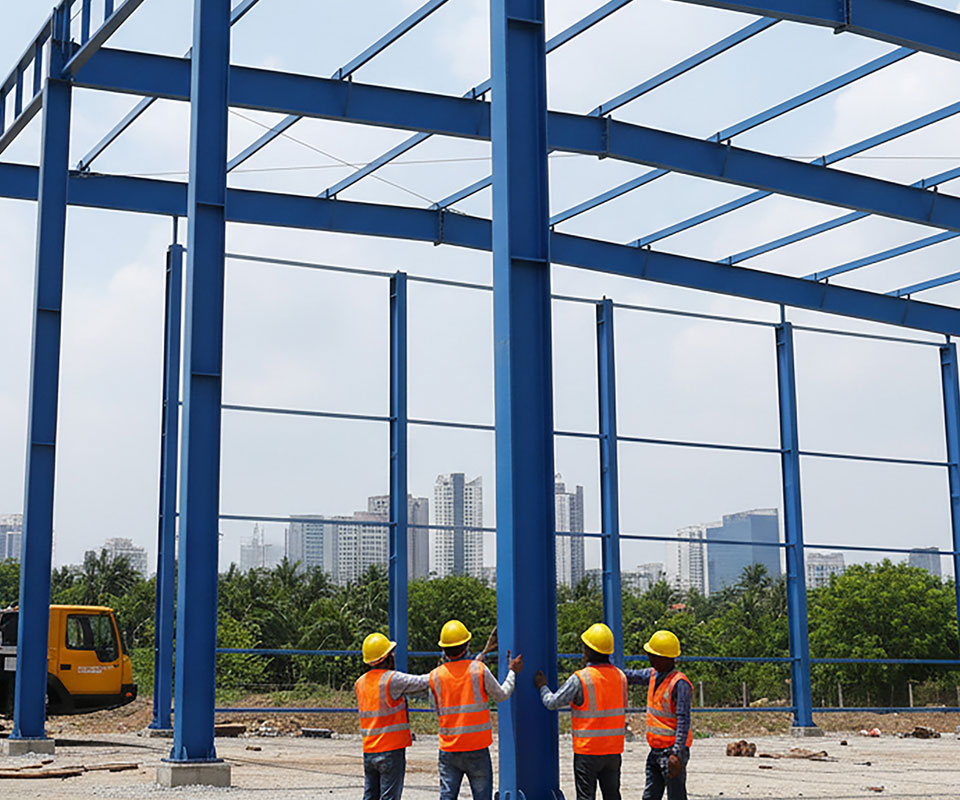
PEB structures, on the other hand, are factory-fabricated steel buildings that are designed and manufactured off-site and assembled on-site. This method significantly reduces construction time and allows for cost-efficient execution. PEB structures are widely used for industrial facilities, warehouses, manufacturing units and large-span buildings due to their speed, scalability and structural efficiency. They also allow easier future expansion and modifications compared to traditional construction.
When deciding between civil construction and PEB structures, factors such as project purpose, budget, schedule and future expansion plans must be considered. Projects requiring architectural detailing and long-term occupancy may benefit from civil construction, while those prioritizing speed, cost control and large clear spans often find PEB structures more suitable.
Ultimately, the right choice depends on aligning the construction method with operational needs and business goals. Consulting with experienced construction professionals helps ensure that the selected approach delivers optimal performance, safety and value over the life of the project.
PEB structures, on the other hand, are factory-fabricated steel buildings that are designed and manufactured off-site and assembled on-site. This method significantly reduces construction time and allows for cost-efficient execution. PEB structures are widely used for industrial facilities, warehouses, manufacturing units and large-span buildings due to their speed, scalability and structural efficiency. They also allow easier future expansion and modifications compared to traditional construction.
When deciding between civil construction and PEB structures, factors such as project purpose, budget, schedule and future expansion plans must be considered. Projects requiring architectural detailing and long-term occupancy may benefit from civil construction, while those prioritizing speed, cost control and large clear spans often find PEB structures more suitable.
Ultimately, the right choice depends on aligning the construction method with operational needs and business goals. Consulting with experienced construction professionals helps ensure that the selected approach delivers optimal performance, safety and value over the life of the project.